

A reader's report, written by Script 360's AI coverage system.
Read 6 September 2026 · from the First draft · 98 pages · read as a Feature Film
The writer can give three versions of the same woman three distinct voices without ever labeling them for the reader — Beth's clipped transactional cool, Liz's patient nurture, and Elizabeth's anxious blurting are each legible from the words alone.
Sign the non-disclosure agreement and you get what's owed to you. One dollar.p.49
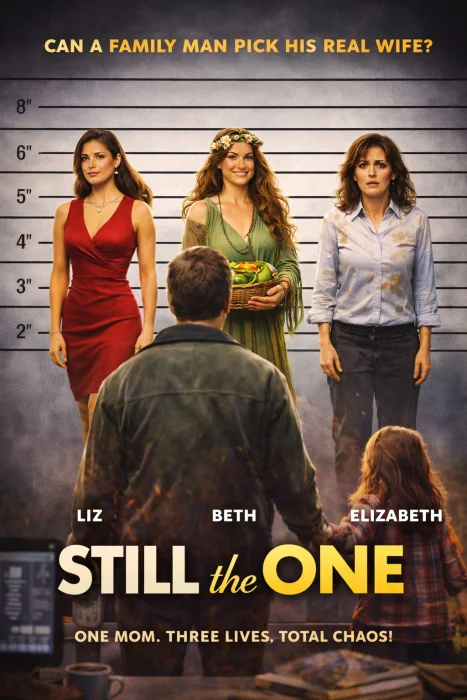
A frazzled working mother, convinced a placebo pill from her therapist has given her a second self, splits into two extreme alter-egos — a ruthless career woman and a domestic supermom — and neglects her real family until a shooting at the neighbours' house forces her to choose who she actually wants to be.
The script opens with a clean, specific premise — Elizabeth tells her therapist outright, 'I wish I had a clone. Maybe then I can accomplish some of the things I want' (p.4) — and then literalizes that wish through a costume-and-wig transformation device tied to train tunnels and sugar pills. The comic engine (Beth the shark, Liz the supermom, both undone by the same overreach) works for a solid stretch, and the writer has a real ear for giving each persona her own register of speech. But the mechanism governing who appears when is never made consistent, the back half detours hard into a domestic-abuse/attempted-murder subplot that the tonal contract of the first forty pages never prepares us for, and the ending — a symbolic train collision, a shooting, a flatline, and then a scene that replays the opening beat-for-beat with no accident and a pregnancy — never clarifies what actually happened to its heroine. The result reads like a script with a genuinely funny, sellable idea that loses its nerve about what kind of movie it wants to be at exactly the point it needs to commit.
Multiplicity · Sliding Doors · I Don't Know How She Does It
Viewers of high-concept, female-led work/life-balance comedies (in the vein of I Don't Know How She Does It or Multiplicity) who are open to a swerve into darker melodrama in the back half.
The hook is stated cleanly and early, which is more than a lot of high-concept scripts manage: Elizabeth names her own wish-fulfillment fantasy to her therapist before the pills even appear, and the placebo device (comic in itself — Dr. Marx literally eats his own 'medicine' on p.31) gives the film a mechanism that could sustain 100 pages of escalating comic disaster. The problem is that the premise promises a comedy about a woman failing at both halves of an impossible ideal, and the script keeps that promise for its first two-thirds, then abandons it for a home-invasion/domestic-violence climax that has nothing to do with cloning, career ambition, or motherhood pressure. The Sheba scandal-and-blackmail plotline is a strong engine for Beth's ambition but it's borrowed wholesale from tabloid-thriller territory and doesn't reflect back on the core 'two selves' idea. By the time Tony Mosdell is loading a revolver, the premise that opened the film has been set aside rather than paid off.
I wish I had a clone. Maybe then I can accomplish some of the things I want. And get some peace.p.4 — the film's actual pitch, stated directly by the protagonist
I seem to have run out of the "magic pills".p.15 — the mechanism is explicitly a placebo, foregrounding theme over literal magic
The inciting device (the pills) lands around page 15, and the first transformation into Beth around page 26 — reasonable pacing for a feature. The trouble is the machinery underneath: sometimes a persona-switch is triggered visibly by a swallowed pill, other times it just happens somewhere in a train tunnel with no pill shown, and the reader is never given a stable rule to track. The midpoint (Beth wins Sheba's account through blackmail, instated as new Creative Director) is a real turn, but it's followed by two nearly identical 'toll of living two lives' montages that repeat the same observation rather than deepen it. The third act stacks a missing-child crisis, a tour, a scandal, a resignation letter and divorce papers arriving in a synchronized split screen, a metaphorical train collision, an actual shooting, a flatlining heart monitor, and then a full reset of the opening scene — which is a great deal of machinery for an ending that never tells the audience which of these things is literally happening to Elizabeth. A script this eventful in its last twenty pages needs its ending to resolve; this one just stops.
The two trains collide into a fire ball in the middle of the tracks.p.100 — purely symbolic climax with no stated rules for how literally to read it
She turns and spots Kenny in his plumber's overall with a breast name tag.p.118 — final scene mirrors the opening with unexplained changes (Kenny promoted, Elizabeth pregnant, Isa vanished), leaving the ending's status ambiguous
Elizabeth's want is unusually well articulated for a first read — 'A moderately ambitious husband for starters. A decent job. A normal family' (p.4) — and Kenny is a consistent, sympathetic counterweight who never becomes a joke at his own expense (his refusal to chase a management job is a real character position, not just comic passivity). Zoe is the strongest-drawn figure in the script: her silence at school, her private singing to a basketball, and her disappearance-to-sing-in-a-balcony sequence give her an actual arc with stakes. But that arc gets dropped — the recital that the whole film has been pointing toward is quietly cancelled by a lie ('No, no, it'll be fine. The recital has been cancelled,' p.72), and the script never returns to whether Zoe's talent or her silence at school is resolved. Beth and Sheba and Tony function mostly as instruments of plot (the blackmailer, the addict, the abuser) rather than people with wants that survive contact with the story, and Elizabeth's actual change of heart is delivered as a dying confession ('I'm sorry. I was such a fool,' p.98) rather than earned across the preceding hundred pages.
A moderately ambitious husband for starters. A decent job. A normal family. Is that too much to ask?p.4 — specific, trackable want stated in the opening scene
No! I like it the way it is.p.20 — small but real character beat for Zoe, wanting the hoop lowered but preferring the challenge — undercuts the idea she's simply passive
No, no, it'll be fine. The recital has been cancelled.p.72 — Beth lies to avoid the conflict, and the recital thread is never resolved on the page
This is the script's clearest strength: the three versions of the heroine each speak in a genuinely distinct register, and it's achieved through word choice and rhythm rather than through stage direction telling us who's talking. Beth is transactional and cold ('Sign the non-disclosure agreement and you get what's owed to you. One dollar,' p.49); Liz is patient and maternal ('Two loops, Zoe. Two,' p.38); Elizabeth is blunt and anxious ('Go fuck yourself!' p.103). Kenny's comic voice ('It's multi-purpose. Dual functional,' p.19) is consistent and endearing without tipping into caricature. Where the dialogue falters is in the therapy-office scenes, which sometimes explain theme directly rather than dramatizing it ('And you think this sense of failure is causing your anxiety?' / 'You're the doctor. You tell me.', p.4), and in the Sheba backstory reveal, which unloads a decade of plot through rapid-fire accusation rather than through anything Sheba herself chooses to say.
Writers write. Copywriters copy.p.9 — sharp, character-specific line that does double duty as theme
Two loops, Zoe. Two.p.38 — Liz's distinct maternal register
And because you only cared about yourself, you had an abortion.p.49 — expository backstory delivered as accusation rather than as something Sheba chooses to reveal
The core device inevitably recalls Multiplicity (a person literalizing the impossible demand to be several people at once), but the physical staging of the transformation — a wig locker on a commuter train, a bathroom-stall changeover timed to a tunnel — is a genuinely inventive piece of visual shorthand, and the choice to make the 'magic' explicitly a sugar pill is a smart, cynical twist on the trope. The script squanders some of that invention, though: it never plays the premise for its more interesting comic possibilities (there's almost no scene where the personas' overlapping days actually collide or contradict each other in front of the same witness, which is the classic engine of this kind of story), and instead falls back on two very familiar arcs — the icy career woman who blackmails her way to the top, and the makeover-supermom who fixes the house and gets her husband promoted. The ending's swerve into attempted murder and a possible-afterlife reset is unusual and unexpected, which is to the script's credit as an instinct, but it's also so unexplained that it reads as strange rather than earned.
She opens it and throws the red wig into the top shelf.p.38 — the wig-locker mechanism is a fresh, physical piece of world-building for the transformation
Kenny reaches under the blankets with his hand and comes up with a loose condom.p.22 — familiar sitcom marital-comedy beat rather than something specific to this premise
There are real strengths in the visual shorthand: the split cul-de-sac, described with the same joke on both ends of the block ('birds chirp melodies, cats frolic with squirrels' versus 'birds don't sing and cats kill squirrels,' p.5–6), does a huge amount of world-building work in two lines. But the story-logic underneath the transformation device is never nailed down — sometimes the switch is a visible pill-and-blackout, sometimes it just happens off-page in a tunnel, and the audience is never told whose 'day' any given scene belongs to until the wig gives it away. The opening train-track gag, played for cartoon-logic slapstick (the train passes directly over Elizabeth and she's unharmed, p.2), sits oddly against the very real train collision used later as a dramatic climax — the two moments ask to be read in incompatible registers. There's also a noticeable amount of inconsistent detail (Ken/Kenny used interchangeably as a speaker tag in the same sequence, 'Let's out a sigh' for 'lets out' repeated several times, 'BALIFF' for bailiff) — not enough on its own to sink the read, but enough that a pass for consistency is overdue.
Here lawns dry up, birds don't sing and cats kill squirrels.p.6 — economical, funny visual contrast doing real world-building
Let's out a deep frustrated sigh.p.2 — recurring typo (should be 'lets') suggesting the draft hasn't had a clean pass
The train zooms over the spot she fell in.p.2 — cartoon-logic near-death that tonally clashes with the literal, fatal-stakes train collision used later
There's a real hook here for talent: one actress getting to play three legible, distinct registers of the same woman is the kind of showcase part that draws a lead and a director looking for range, and 'placebo pill gives overworked mom a second self' is a clean, postable log-line. The workplace-management-company setting and pop-star client give it some visual gloss and a plausible mid-budget comedy shell. Against that, the tonal whiplash between broad domestic slapstick and a genuinely dark abuse-and-shooting subplot, plus an ending that won't commit to what happened, would give a buyer pause about how to market or test the film — is it a comedy with a dark detour, or a drama with comic trappings? As written, it would need a firmer answer to that question before it's an easy sell, though the premise and the lead-role showcase are real assets a producer could see past the current draft's confusion.
Beth, I want to thank you. I couldn't do it without you.p.76 — Sheba subplot gives the film a music-industry gloss and a starry supporting role
He picks up the dildo, scans the cul de sac, slips it into his pants and walks over to the garage door.p.96 — the raunchier neighbourhood-comedy register sits uneasily next to the same character loading a revolver a page later
Decide, concretely, what happens to Elizabeth at the end — and then rebuild the last act so that resolution is legible on the page. Right now the script asks the reader to hold a shooting, a flatlining heart monitor, a symbolic train collision, and a scene that replays the opening with a pregnancy and no accident, without ever telling us which of these is real, dreamed, or metaphorical — and that ambiguity swallows every other strength in the script, because nothing that came before it can be judged as paid off until the ending decides what it's paying off.
Decide, and then dramatize on the page, exactly what the ending means — did Elizabeth die and this is an afterlife/vision, is this a flash-forward after recovery, or is the whole Beth/Liz arc revealed to be a fantasy she narrated to Dr. Marx? Whichever it is, plant the rule early so the final scene reads as a payoff rather than a reset.
This is the single biggest thing standing between the script and working — right now the ending doesn't resolve the story it set up on page 4.
The final 15 pages, from the train collision through the closing scene (pp.100-120)
Establish one consistent, visible rule for when Elizabeth becomes Beth or Liz (always the pill, always the tunnel, always a choice she makes) and apply it every time, so the reader is never guessing which persona is speaking until the dialogue tells them.
Right now the mechanism is inconsistent, which undermines the premise's central joke and makes the film's internal logic feel unfinished.
Every transformation sequence (pp.26, 38, 62, 87)
Either integrate the Mosdell abuse/shooting plotline earlier and more deliberately (seed Tony's menace well before the finale, give Elizabeth a reason to be drawn into it that connects to her own theme), or trim it back so it doesn't have to carry the entire third-act climax alone.
As written it's tonally disconnected from the comedy that precedes it and arrives to do too much narrative work too late.
The Mosdell subplot, pp.6-7, 40, 95-99
Give Zoe's conservatory/recital arc an actual payoff — a scene, even a brief one, where her singing is heard and acknowledged by her parents rather than lied about and dropped.
It's the most emotionally specific material in the script and currently evaporates without resolution, wasting the strongest character work here.
The recital thread, pp.20, 60, 72
Trim the therapy-office scenes, which currently repeat the same beat (Elizabeth complains, Marx probes, she deflects) three or four times; cut to the two visits that actually move the story and let the rest of the theme live in the alter-ego scenes instead.
Tightens the read and moves theme into action rather than restating it in dialogue.
Dr. Marx's office scenes throughout (pp.3-5, 10-13, 24-25, 89)
Do a consistency pass for character name tags (Ken/Kenny), recurring typos ('let's out' for 'lets out'), and spelling ('BALIFF').
Minor on its own, but enough repetition to interrupt a fast read.
Throughout
How the tonal collision between slapstick and domestic-violence material would actually play in the room with the right directorial tone and a strong lead performance; whether the deliberately ambiguous ending would read as haunting or simply confusing to a paying audience; and whether the typos and name inconsistencies reflect an early draft or a lack of a final pass.
This report was written by Script 360's AI coverage.
Upload a screenplay and get one of your own — scored, evidenced, and quoting your own pages back at you.
Try it on your script