

A reader's report, written by Script 360's AI coverage system.
Read 15 September 2026 · from the First Draft · 47 pages · read as a 1 Hour Episodic TV
The writer's real gift here is building a strange economy out of small, plausible details and then using it structurally — the discovery that the grandmother being replaced has her own paid-for granddaughter is the kind of idea that recontextualizes everything before it, and it's delivered with restraint rather than a speech.
This is my Penelope. She comes once a month and we have a wonderful time.p.30
A professional grandmother-for-hire, paid to ease grieving families through a loved one's death and to quietly replace inconvenient living grandmothers for image-conscious clients, has to earn a suspicious five-year-old's trust by tracking down the real grandmother she's been contracted to erase.
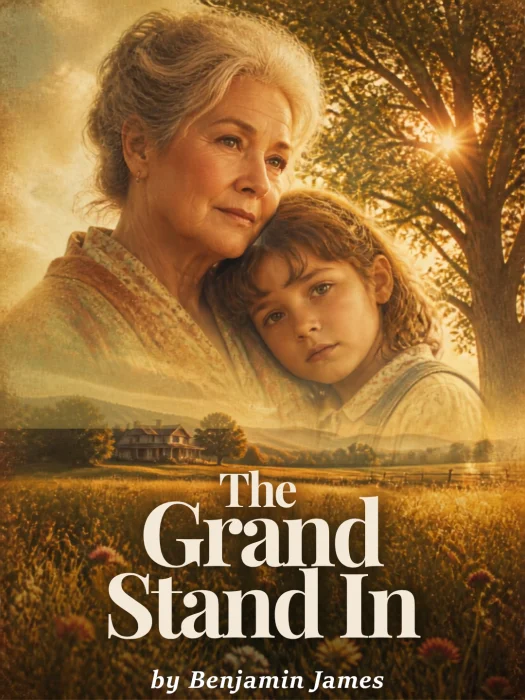
This is a near-future dramedy pilot built on a genuinely sharp premise: a company that rents out professional 'Stand-In' grandparents, either to soften a real grandparent's death for grandchildren or to swap out a living one who doesn't fit the family's brand. The pilot spends its first act establishing that world with confident, specific detail — uniforms, prep files, a corporate motto ('We don't replace, we upgrade') — before landing its best idea about two-thirds through: the grandmother Mia is hired to replace has her own hired stand-in granddaughter, meaning the whole economy is a hall of mirrors. That reveal, in the scene with Ms. Lyn, is the strongest writing in the script — quiet, sad, and exactly the kind of turn the premise promises. Around it, though, the episode is looser than it needs to be: a full dinner-table subplot with a different family (the Morrises) sets up a nut allergy that is never mentioned again, a romantic subplot with Cal is introduced and shelved, and the Kandinski confrontation ends with an admission of guilt that changes nothing procedurally — the Arranger simply notes the client 'still want[s] you' and the status quo resumes. The voice is confident and often funny, and Mia herself has a clear, workable want (do the job well, keep her professional distance, get the information she needs to actually connect with the child), but the episode reads more like a collection of well-observed vignettes in service of a pilot's world-building than a single escalating story.
Black Mirror ('Be Right Back') · Made for Love · Kidding · Russian Doll
Adult drama viewers drawn to melancholy, satirical near-future premises about family and commodified intimacy, on a premium streamer or cable network looking for character-driven speculative fiction rather than hard sci-fi.
The core idea — a company supplying professional grandparents, either to soften a real death or replace a living inconvenience — is specific, commercially legible, and immediately generates story ('a nuclear supplemental provider for the modern family,' p.3). It promises satire of commodified intimacy and delivers on that promise in the Kandinski storyline, where the 'switch' is nakedly about brand management rather than grief. Where it's less sharp is in how much of the episode's texture (the Morris family dinner, the exercise-room chat with Angie and Martha) is atmosphere for the premise rather than plot generated by it — pleasant but not load-bearing. The best test of the premise, the Ms. Lyn scene, proves it can go somewhere genuinely uncomfortable and moving, which is the strongest evidence the idea has legs for a series. The Halverson bereavement thread is the premise's gentler, sadder half, and it's used well as a bookend, closing exactly where it opened.
At Grand Stand-In: We don't replace, we upgrade.p.4 — the company's guiding ethos, stated with unsettling corporate cheer
But we normally upgrade the dead, or almost-dead; not the current model. What kind of daughter treats her own mother like something you can trade-in?p.25 — Mia articulating the premise's moral question directly
The episode has a workable spine — Mia takes the Kandinski job (inciting event, roughly p.6-8), hits a wall with Penelope's lullaby (complication, p.32-33), investigates and finds Ms. Lyn (turn, p.30), and confronts the Kandinskis (climax, p.38-40) — with the Halverson calls bookending the whole thing. But the middle carries a full unrelated dinner-table scene with the Morris family that doesn't feed the A-story and is never revisited, which slows the build toward the Kandinski plot. The climax itself is undercut by the resolution: after Yasmin's raw confession, the very next scene has the Arranger simply reporting the client 'still want[s] you' — the confrontation produces no consequence, procedural or emotional, that changes what happens next. For a pilot, that's a missed chance to give the audience a reason to expect escalation in episode two rather than more of the same case-of-the-week shape.
It's because my mother was boring and self centered!p.39 — the emotional climax of the Kandinski plot
I don't know how you do it, but they still want you.p.41 — the confrontation is immediately absorbed back into business as usual, with no visible cost or change
Mia is the script's clear strength: she has a concrete professional want (do the job at the highest level, maintain 'excellent disconnecting skills') that is legibly in tension with an emotional leak she can't fully control, visible in her reaction to the Halverson calls and her tears with Ms. Lyn. Her insistence on real information rather than a script — 'The least they can do is give me key information that will help me bond with their daughter' (p.32) — is a specific, actionable want that actually drives the plot, which is rarer than it should be. The supporting cast is colorful but thinner: Angie and Martha are vivid company (Martha's flat nihilism is a good running bit) but exist mostly as texture for this episode, and Cal is introduced with a full scene establishing a will-they-won't-they dynamic that then goes nowhere in this hour. The Kandinskis are effective caricatures of performative wealth but are drawn from a fairly recognizable type (influencer-parents, livestreamed workouts) rather than given an individual quirk that isn't already implied by the premise.
The least they can do is give me key information that will help me bond with their daughter.p.32 — Mia's want made concrete and actionable
But I'm not in love with you.p.24 — Mia's boundary-setting with Cal, a clear character trait that isn't followed up on in this episode
The dialogue mostly sounds like people, and there's a real comic engine in the banter — Mia and the Arranger's back-and-forth has a genuine rhythm, and the Kandinskis' 'Four/Five' exchange is a small, efficient piece of character work that tells you everything about their attention to their daughter without a word of exposition. Distinct voices are mostly maintained: Martha's flat despair, Kyle's dad-joke deflection, Yasmin's status anxiety. The weak spots are the moments where the script's themes get spoken aloud rather than dramatized — Angie's 'Do you think that every time we die as someone else's grandmother, we lose a little of our own soul in the process?' (p.28) reads as the writer's thesis statement voiced by a character who has otherwise been comic relief, and it lands as a tonal seam rather than something Angie would say.
I'm sorry. I used to be an English teacher, remember? So, how much face time?p.6 — efficient character detail delivered through a joke, not exposition
Do you think that every time we die as someone else's grandmother, we lose a little of our own soul in the process?p.28 — theme stated directly rather than dramatized
The premise itself is not something you've read a hundred times, and the script knows its best asset: it builds the world through procedural specificity (the file prep, the switch protocol, the parking lot full of grandmother-appropriate cars) rather than through a lecture. The genuine surprise is the Ms. Lyn reveal — that the woman being replaced has her own paid stand-in granddaughter — which turns a one-off satire premise into something recursive and sadder, suggesting an entire hidden economy of substituted intimacy running underneath the visible one. Where it leans on more familiar material is the Kandinskis themselves, whose vapid-wealthy-parents-livestreaming-their-workouts satire is a recognizable type rather than a new one, and the 'not dead yet' Halverson thread, while well executed, is closer to a conventional grief narrative than the switch-job material. The script is strongest exactly where it trusts its own strange idea and weakest where it reaches for satire everyone already knows how to write.
A Stand-In Grandchild?p.30 — the reveal that recontextualizes the whole premise
We livestream our workouts on YouTube. Fifty thousand subscribers!p.31 — a familiar satirical target rather than a new one
Action lines are generally lean and visual — 'Mia floats across the room, draped in a long nightgown' (p.1) does its job in one line — and the pilot moves at a decent clip. There's a genuine ambiguity worth fixing in the opening image, though: 'Movement from the bed pulls Mia's attention from the window as a body shifts under the covers' (p.1) is never explained or paid off, and a reader is left wondering who was in the bed at all, given Mia's later, separate invitation to Cal. There are also small consistency issues throughout — 'The Kandinski's' used repeatedly where 'the Kandinskis' is meant, and the Arranger addressing Hewitt as 'Mr. Hewitt' rather than 'Mr. Kandinski' (p.20) — that are easy fixes but currently read as a draft that hasn't had a clean pass. None of this is severe enough to slow the read seriously, but it's the kind of thing that erodes confidence on a first pass.
Movement from the bed pulls Mia's attention from the window as a body shifts under the covers.p.1 — an unresolved ambiguity about who is present
Mr. Hewitt, we have a 90% success ratep.20 — name/title inconsistency
The world's internal rules mostly hold, but several threads are opened and dropped. Michael Morris's nut allergy incident (p.9-11) is a fully staged scene with real stakes and is never referenced again, which reads like a standalone cold-open beat that wandered into the middle of the episode. Cal is introduced with a scene establishing an ongoing dynamic ('It's okay for grandparents to still be in love with each other,' p.24) that has no bearing on the rest of the hour. The bereavement timeline is also slightly loose: Mia tells the Arranger there are 'three more scheduled phone calls' (p.7) before the 'I told him today' call, but by the final call Paul says 'even after six weeks,' and the episode never shows or accounts for what happened to the intervening calls — a minor but noticeable gap in the tracking of the show's own clock.
Three more scheduled phone calls.p.7 — an established number that the episode doesn't track
even after six weeks...I still wished I had more time.p.43 — a timeline that doesn't reconcile cleanly with the earlier count
This is a legible pitch for a streamer or premium cable buyer: a distinctive, easily-logged high concept ('grandmothers for hire'), a lead role built for a strong actress in her late fifties or sixties, and a production footprint that's mostly suburban interiors and one glossy modern house — a modest budget for a genre-adjacent hour drama. It sits comfortably next to speculative-satire-with-heart shows currently being bought, and the anthology-adjacent, client-of-the-week engine (established explicitly by the Arranger handing Mia new folders) gives a buyer an easy answer to 'how does this sustain a season.' The chief risk is tonal: it needs to commit to being funnier or sadder than this draft currently is, because the pilot sits in a comfortable middle that a buyer might read as safe rather than as a clear brand.
We provide a service, not a judgement.p.25 — a clean encapsulation of the show's premise and tone, useful in a pitch
Decide what the Ms. Lyn reveal actually costs Mia and the Kandinskis, and build the last third of the episode around that consequence rather than letting the confrontation dissolve back into business as usual — right now the episode's best idea doesn't change anything that happens next, which is the single biggest thing standing between a good pilot and a great one.
Give the Kandinski confrontation a real consequence — does Mia get pulled from the job, given an ultimatum, forced to keep lying to Penelope now that she knows the truth about Ms. Lyn? Right now the plot resets to status quo immediately afterward.
Without a cost, the midpoint reveal (Ms. Lyn) and the climax (Yasmin's confession) don't change anything going forward, which weakens both the episode's ending and the pilot's promise of what episode two escalates from.
p.38-41, the confrontation and the following Arranger office scene
Either build the Morris family's nut-allergy scene into the spine of the episode (a second case running parallel to the Kandinski job) or trim it to what's needed to establish tone, since as written it's a fully staged subplot that's dropped entirely.
A dangling thread this prominent early in a pilot reads as an unfinished commitment rather than color.
p.9-13
Either give Cal's scene a function within this episode's story (does he affect Mia's decision about the Kandinski job, or her willingness to be emotionally honest with Ms. Lyn?) or clearly flag it as series set-up and trim it down.
As written it's a fully developed scene that doesn't move this episode's plot or theme, which slows the middle.
p.23-25
Cut or rework lines where a character states the show's theme outright, particularly Angie's soul-loss question, and find a way to dramatize the same idea through behavior instead.
These moments break the otherwise naturalistic, comic voice the rest of the dialogue maintains.
p.28
Resolve the ambiguity of the opening 'body under the covers' and clean up name/possessive inconsistencies (Kandinski's/Kandinskis, Mr. Hewitt/Mr. Kandinski).
Small clarity and proofing issues that currently cost the reader confidence on a first pass.
p.1, p.20, throughout
Whether the tonal balance between broad satire (the Kandinskis) and quiet grief (the Halversons) plays consistently on screen, how a director would handle the show's near-future setting visually, and how the ensemble (Angie, Martha, Cal, the Arranger) is meant to recur and develop across a season, since this pilot mostly introduces them as texture.
This report was written by Script 360's AI coverage.
Upload a screenplay and get one of your own — scored, evidenced, and quoting your own pages back at you.
Try it on your script