
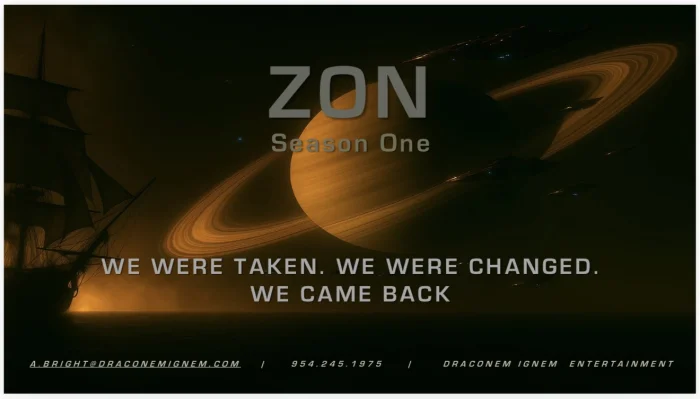
When 130,000 abducted humans return to a divided Earth under the banner of an alien empire, investigative reporter Lance Rogers and their leader, Archduke Nathan Kilmer, must navigate political conspiracy and corporate greed to unite humanity against an approaching enemy, while imperial protection threatens the independence they hope to preserve.
Twenty years after their mysterious abduction, 130,000 humans return to Earth aboard an imposing armada. Now known as the Tutatori, they bring advanced technology and a dire warning: the Dvora, a savage and relentless alien race, are coming to conquer Earth.
Led by the charismatic Archduke Nathan Kilmer, the Tutatori arrive under the banner of the powerful Ylatchee Imperium. They offer Earth the technology needed to stand against the Dvora, giving humanity an immediate fighting chance. But their offer carries a momentous choice: in five years, a vote of all Earth’s citizens will determine whether the planet joins the Imperium, gaining its protection at the cost of independent sovereignty. If Earth refuses, the Tutatori will depart, knowing the planet’s destruction could leave them the last survivors of the human race.
The first season follows the upheaval sparked by their return through the eyes of two men: investigative reporter Lance Rogers and Archduke Nathan Kilmer.
Born into privilege but long at odds with his family’s corruption, Lance is a sharp, relentless journalist determined to expose the truth. His mother, Amelia Rogers, is a ruthless corporate magnate and political kingmaker intent on controlling the narrative. Covering the Tutatori’s arrival places Lance between the Imperium’s sweeping vision and Earth’s rising fear, forcing him to confront both humanity’s uncertain future and the machinery of power that made his family untouchable.
Nathan was once an unassuming high school history teacher, raised by a decorated military father whose strict guidance instilled a deep respect for discipline, leadership, and sacrifice. Though he never pursued a military career, his understanding of history and ability to inspire others made him a natural leader. Abduction and two decades within the Ylatchee Imperium transformed him into the Archduke of the Tutatori. Now he returns with hardened resolve and a duty to prepare humanity for war. His conviction makes him a beacon of hope, but his uncompromising sense of honor strains alliances and forces painful choices between his obligations to the Imperium and his loyalty to the world he left behind.
As Lance investigates and Nathan seeks humanity’s trust, nations, corporations, and rival factions compete to control the technology that could save them. Some embrace the Tutatori as humanity’s salvation; others fear that imperial protection will become domination. Behind the public debate, powerful governments and corporations conspire to steal Tutatori technology, using misinformation to preserve their authority and turn Earth’s chance at survival into an instrument of control.
Caught between an approaching enemy, an empire demanding allegiance, and a world divided against itself, Lance and Nathan confront a struggle that is as personal as it is planetary. Long before the vote, the battle for humanity’s future has already begun.
With its mission complete, the new U.S. space shuttle Eclipse is preparing to return to Earth when it is abruptly redirected to investigate mysterious objects approaching the planet. The reconnaissance mission reveals a staggering sight: an alien armada of over 700 ships. Lance Rogers, the first embedded reporter in space, seizes the chance to document history, until a violent gravitational distortion tears through the shuttle, knocking it out of orbit and sending it tumbling out of control. An alien vessel stabilizes the Eclipse, but the shuttle remains crippled, its crew stranded and running out of air. With communications severed and Earth’s leaders fearing an invasion, the vessel offers further assistance. Lance must persuade Commander Grayson to place their lives in the hands of their unknown rescuers. Brought aboard the colossal flagship Tellus, they discover a terrifying arsenal and unsettling signs of human familiarity. Their lives have been saved, but by whom, and for what purpose?
ZON is a multifaceted science fiction intellectual property spanning a scripted series, comic books, and a tabletop game. Each format offers a distinct perspective within a shared universe, connecting its characters, history, and conflicts.
Set in 2048, ZON begins with the arrival of a mysterious armada carrying 130,000 humans abducted twenty years earlier. Now known as the Tutatori, they return with advanced technology and a warning: the Dvora are coming, and a divided Earth must prepare to survive. The scripted series explores the political and personal upheaval of their return. The comics are 2 series, one reveal the abductees’ transformation, the 2nd, history of the Ylatchee Imperium, and the wider universe, while the tabletop game, have build a working numerous prototype, places players inside these conflicts, allowing them to forge alliances, confront threats, and make their own choices.
Together, these connected experiences create a universe audiences can watch, read, and play, built around humanity’s struggle to determine whom to trust, what independence is worth, and whether it can unite in time to survive.
This writer is genuinely good at giving people a contradiction that explains their behavior without a character ever having to state it — Amelia's cold political calculus undercut by one shaking hand is the clearest example, and it's the instinct most worth protecting into the next draft.
Her hand trembles, just once. / She stills it.p.23
As an armada of alien vessels decelerates toward Earth, a silenced astrophysicist, a cold-blooded defense executive, and a crippled shuttle crew — including the executive's journalist son — become the first humans forced to decide whether first contact means diplomacy or invasion.
This is an ensemble first-contact pilot built on a literal countdown clock, crosscutting a silenced whistleblower scientist, a Pentagon war room, and an ISS shuttle crew taken captive by an advanced alien fleet. The opening frames the whole hour as a replay of 1492 — 'History calls it discovery. Those who lived it… called it something else' — and the pilot mostly delivers on that promise visually, landing on a genuinely cinematic hangar-bay climax. Its best asset is Amelia Rogers, a political operator willing to sacrifice her own son for the species whose composure cracks for exactly one beat before she steadies it; its weakest is a back half that restates the same oxygen-countdown crisis almost verbatim rather than escalating it, and a Marcus Moore thread that goes dark after his detention and never reconnects to the main spine within the hour. The theme of sacrifice is mostly asserted through narration and dialogue rather than paid for by events. This reads as a strong, sellable premium-sci-fi pitch with real writing instincts in its political dialogue and character work, held back by a draft that hasn't yet tightened its middle or decided whose hour this actually is.
The Expanse · Independence Day · Arrival · Colony · 3 Body Problem
Adult viewers of premium event sci-fi with political-thriller texture — the audience for The Expanse or Battlestar Galactica rather than a YA or family crossover.
The pilot promises a first-contact sci-fi epic explicitly framed as a replay of 1492 colonization, stated outright in the cold open: 'History calls it discovery. Those who lived it… called it something else.' That's a clean, legible promise, and the pilot keeps it — by the close, humans are dwarfed, towed, and walked into an alien war-cathedral exactly as the opening metaphor set up. But the mechanics of the invasion itself (a scientist silenced by the government, a war room debating escalation, a crew taken captive by a vastly superior fleet) are a familiar shape a reader will place quickly. What differentiates it is specific rather than structural: the 'negative-mass drive' conceit gives the arrival its own physics, and the late plant that the alien soldiers have 'Human proportions' promises a mythology the rest of the hour hasn't earned yet but will want answered. As a pitch it's clear and workable for a series; as an idea it's assembled from recognizable parts more than it invents a new one.
History calls it discovery. Those who lived it… called it something else.p.2 — States the pilot's central metaphor directly
Negative-mass signatures.p.6 — The specific sci-fi conceit that differentiates the arrival
Human proportions.~p.64 — Mystery hook promising series mythology
Underneath the invasion plot this is about what a country — and a mother — will sacrifice for survival, and whether the person making that calculation is also the person who pays for it. The scene where it should land hardest is Amelia watching the Eclipse vanish into the Tellus's hangar doors: 'Her own reflection hovers over the image — her face and her son's shuttle fused into one frame.' It doesn't quite land, not because the staging is wrong but because the pilot hasn't yet made Lance's survival cost anything concrete — he comes through scarred but intact, so Amelia's declared willingness to sacrifice him stays a stated position rather than a paid price. The theme arrives mostly through Nathan's framing narration rather than through consequence: 'Every crossing demands a price… and no one ever knows who will pay it' is the thesis stated at the top, and the closing V.O. mostly restates it. The underlying argument — that the people deciding what a nation sacrifices are rarely the ones who pay it — is a sharp and real one, and Amelia articulates it with total clarity, but a single pilot hour can only promise this theme; it hasn't yet proven it.
Every crossing demands a price… and no one ever knows who will pay it.p.1 — Theme stated via narration rather than dramatized
If his death saves this planet, I'll live with it.p.23 — The sacrifice calculus stated outright by Amelia
Her own reflection hovers over the image — her face and her son's shuttle fused into one frame.p.62 — The scene where the theme should land, and doesn't quite
The countdown supers (T-72:00:00 down to T-00:00:00) give the hour a genuinely clean spine, and cutting between Marcus's discovery, the Pentagon, the ISS, and the crippled shuttle under one visible clock is the strongest structural decision in the script — legible, propulsive, and landing on exactly the right beat with the docking clamps locking shut at T-00:00:00. The weakness is in the middle: once the shuttle is crippled, the pilot restates the same jeopardy beat three or four times rather than escalating it — Murphy gives nearly identical oxygen math twice: 'Ten extra minutes. Twenty-eight total.' The Marcus thread, which opens the episode with real tension, effectively stops advancing once he's taken into custody and resurfaces only once, briefly, with no connective tissue to the shuttle crisis — clearly series set-up, but within this hour it reads as a dangling B-story rather than a working second act. The macro architecture is sound; the scene-to-scene pacing in the back half is loose.
SUPER: T–72:00:00 TO FIRST CONTACTp.2 — Countdown device organizing the whole hour
Ten extra minutes. Twenty-eight total.p.45 — Repeated beat rather than escalation
You missed one.p.54 — Marcus thread left hanging with no bridge back to the spine
This is where the pilot is strongest. Grayson's rigidity has a specific, concrete wound behind it — 'Twelve dead because I hesitated. I won't do that again.' — which retroactively explains every 'protocol' line he delivers earlier, and he's allowed to actually move once Lance's argument lands: 'Open a channel.' Lance is consistent across the hour, a journalist whose instinct to document is both his flaw and his function, landing in one clean line: 'The story won't be that we died. It'll be that we went blind on purpose.' Amelia is the most interesting figure in the piece precisely because her coldness is challenged by her own body rather than her own dialogue — she states a monstrous calculus and then, alone, 'Her hand trembles, just once. She stills it.' That contradiction between stated position and suppressed feeling is exactly the kind of beat a reader remembers. The cost of this ensemble approach is that no single want organizes the hour — Marcus, Lance, Grayson, and Amelia are all running separate engines, which may be intentional but means no one throughline gets the space to fully resolve.
Twelve dead because I hesitated. I won't do that again.p.55 — Concrete, earned backstory driving present behavior
Her hand trembles, just once. / She stills it.p.23 — Physical contradiction undercutting stated coldness
The story won't be that we died. It'll be that we went blind on purpose.p.56 — Consistent, specific character throughline for Lance
At its best this dialogue is quotable and voice-specific — Amelia delivers policy like a threat: 'Better blind than bait. The first one to flinch, loses,' and Viktor and Dasra have an efficient double-act rhythm that characterizes both men in four words: 'You always give people too much credit.' / 'And you never give them enough.' At its worst, the script has characters explain the plot's physics to each other in language no one under pressure would actually use: 'They're folding local gravity — using Jupiter and Saturn's wells to slingshot inward. Constant thrust. No deceleration' reads like a writer's note rendered as spoken exposition, and the Marcus/Kingston phone call covers almost identical ground a few pages earlier in nearly the same words. The crisis-room sparring, especially anything involving Amelia, is the script's best writing; the dialogue tasked with delivering the sci-fi concept is its weakest.
Better blind than bait. The first one to flinch, loses.p.52 — Sharp, character-specific political dialogue
You always give people too much credit. / And you never give them enough.~p.33 — Efficient, voice-distinct banter
They're folding local gravity — using Jupiter and Saturn's wells to slingshot inward. Constant thrust. No deceleration.p.19 — Exposition dressed as dialogue, duplicating an earlier scene
The component parts here are familiar — the scientist silenced by men in black, a war room split between a hawkish president and a cold corporate operator, an astronaut crew captured by a fleet that's been waiting — and a reader will place it alongside Independence Day's war room and Arrival's first-contact scientist without much effort. What's genuinely the script's own: the specificity of the negative-mass drive, where gravity distortion leads the object rather than following it ('They're not moving through gravity. / They're moving with it.'), gives the arrival its own texture rather than just 'big ships appear,' and the late plant that the alien soldiers have 'Human proportions' is a real hook that promises a mythology the rest of the pilot hasn't earned yet. The 1492 framing device is a clever conceptual choice even where it's delivered too literally — the idea itself isn't unoriginal so much as it announces its own metaphor instead of trusting a reader to find it.
They're not moving through gravity. / They're moving with it.~p.7 — A genuinely specific sci-fi mechanic, not generic spectacle
Human proportions.~p.64 — A fresh mythological hook for the series
History calls it discovery. Those who lived it… called it something else.p.2 — Conceptual framing device, delivered without subtlety
The action writing is often genuinely cinematic and economical — 'Dark shapes emerge from the void. First one. Then dozens.' does a lot of work in six words, and the hangar reveal gives a reader a clear image fast: 'Towering mechs stand dormant along catwalks, armor etched with runes and battle scars.' The recurring fragment-stack rhythm — short declaratives broken onto their own lines, three at a time — is a real signature and works in small doses, building tension through restraint: 'Not threatening. / Not forceful. / Not a request.' The problem is it's used constantly, in nearly every scene, so by the midpoint it reads less like a choice and more like a tic a reader has to push through rather than be carried by. There are also a handful of surface slips worth a clean-up pass — 'Kinston' for 'Kingston' on ~page 7, duplicated scene numbering through the middle section — but these are an afternoon's fix and don't reflect on the underlying prose.
Dark shapes emerge from the void. First one. Then dozens.p.3 — Economical, visual action writing
Not threatening. / Not forceful. / Not a request.p.12 — The fragment-stack device, effective but overused across the script
Towering mechs stand dormant along catwalks, armor etched with runes and battle scars.p.62 — Clear, fast image-building
The pilot raises a specific accountability thread and then drops it entirely: Desoto discovers the military 'knew this wave was coming' and didn't warn the shuttle crew, treated as a real breach in the scene, and then it never resurfaces — no consequence, no acknowledgment, before the hour ends. The oxygen countdown is stated as escalating but the numbers are repeated almost verbatim rather than tightened — 'Ten extra minutes. Twenty-eight total.' said once by Murphy and then again, nearly word for word, by Grayson a few pages later — which reads as an unrevised duplication rather than deliberate restatement. Marcus's entire thread — the file upload cut off at 3%, the hidden coordinates — never connects back to the shuttle crisis within this hour; presumably series set-up, but as written it's a loose thread rather than a cliffhanger, with no bridge offered. None of these breaks the read on their own, but together they suggest a draft that hasn't yet been tightened for redundancy and follow-through.
You knew. And you didn't warn them.p.40 — Raised as a real accountability stake, never followed up
Ten extra minutes. Twenty-eight total.p.48 — Near-verbatim repetition of an earlier beat
You missed one.p.54 — Marcus's thread closes on a promise with no connection to the A-plot
This sits on the prestige sci-fi event shelf next to The Expanse, Colony, and 3 Body Problem — a premium buyer would recognize the pitch instantly from the countdown clock and the war-room scenes. It needs a recognizable cast to anchor the ensemble (Amelia and Desoto are roles that attract a name), and the budget ask is real: zero-g shuttle interiors, a fleet of CG warships, and a mothership hangar sequence that reads like a feature set piece rather than a standard episodic hour. That scale is both the sell and the risk — a strong pitch for a deep-pocketed streamer, a poor fit for a conventional cable budget. The colonization framing and the cliffhanger ending both give a marketing department something concrete to build a campaign around.
The sheer scale makes the shuttle feel like a toy placed in a war cathedral.p.65 — Signals the scale and budget this concept demands
United States Shuttle Eclipse, this is the Imperial Frigate Tremaine.p.39 — The clean genre hook a buyer could pitch from
Fighter screens up. Full blackout to civilian agencies until we confirm intent.p.52 — Political-thriller texture that broadens the audience beyond pure sci-fi
Tighten the back half so the shuttle crisis escalates instead of repeating itself, and give Amelia's declared willingness to sacrifice her son an actual cost within this hour rather than leaving it a stated position — those two fixes would do the most to turn a strong premise into an hour that lands emotionally as well as structurally.
Cut the duplicated oxygen-countdown beats down to a single escalating restatement instead of two near-identical ones.
The back half currently reads as repeating its own jeopardy rather than compounding it, which slows the hour right when it should be accelerating.
~p.45 and ~p.48, Murphy and Grayson's dialogue
Give Marcus's thread one more scene that visibly intersects with the shuttle/Pentagon plot before the hour ends, or clearly brand it as a cold-open-and-tag rather than a parallel B-story.
As written it opens the episode with real tension and then goes dark with no bridge back, reading as abandoned rather than deliberately withheld.
Scenes 12-29 and 93 (Marcus's arc)
Give Amelia's stated willingness to sacrifice Lance an actual cost within this hour — something she has to do, or something that happens to her, not just a position she states.
The theme of 'the price of crossing' is currently promised through narration and dialogue but never paid by anyone, which is why the ending doesn't land as hard as the setup earns.
Amelia's scenes in the Pentagon (~pp.18-24, 48-56)
Rewrite the Marcus/Kingston and Pentagon-analyst physics exposition so the concept is delivered through behavior and consequence rather than spoken jargon in two separate scenes.
The same explanation is currently given twice in near-identical language, which is both redundant and the weakest dialogue in the script.
~pp.7-8 and ~p.19
Decide which of the four engines (Marcus, Lance, Grayson, Amelia) is the pilot's actual spine and weight the hour's scene order and screen time accordingly.
The ensemble currently reads as four separate pilots stitched together; naming a lead would help a reader (and a buyer) answer 'whose show is this' quickly.
Throughout
Audit the fragment-stack device ('Not X. / Not Y. / Not Z.') for frequency and reserve it for the two or three moments that should really land.
Currently used in nearly every scene, it has stopped reading as a deliberate choice and become a tic that slows the page.
Throughout the action description
Whether the alien visual design and zero-g sequences would actually read as intended on screen, whether the ensemble would be given equal production weight, and whether Marcus's dangling thread pays off satisfyingly in a later episode this pilot is clearly banking on.
Loading…
Want to read this script?
Join Script 360 and request it directly from the author!
Write or upload your own Screenplay
Write it, break it down, sketch its characters and get coverage on it — then send a page like this one to anybody you like.
Join Script 360